


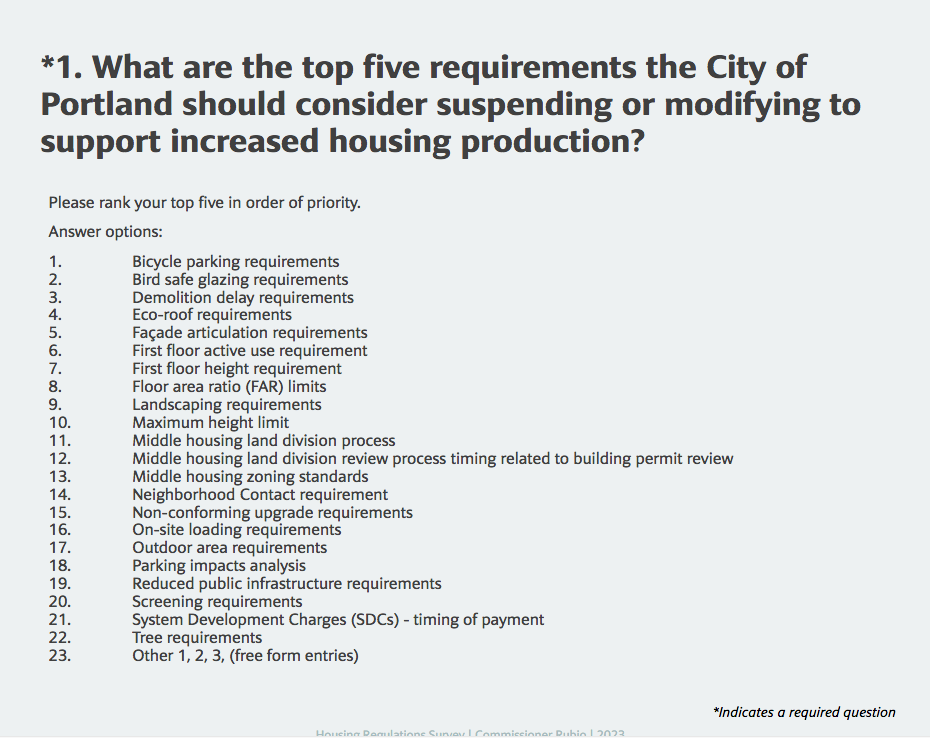
Metropolis leaders are turning over each doable rock to seek out insurance policies that can assist them construct extra housing extra rapidly. Final month, Portland Metropolis Commissioner Carmen Rubio and the Bureau of Growth Companies (BDS) despatched out a survey asking which constructing necessities the Metropolis of Portland ought to take into account suspending or modifying to assist them attain that aim.
The outcomes of that survey got here out Wednesday and the factor on the prime of builders’ listing of peeves — guidelines in regards to the kind and amount of bicycle parking required in new constructing tasks — raised loads of eyebrows in transportation circles.
The survey was emailed to three,100 folks concerned within the constructing allow course of: those that had utilized for development permits up to now 4 years; non-profit organizations growing new housing; companies and professionals concerned in housing improvement; and metropolis workers from the seven bureaus who assessment permits.
Requested to rank the highest 5 most burdensome laws out of an inventory of twenty-two, over a 3rd of the the 600 respondents selected bike parking necessities as a top-five precedence standing in the best way of extra rapidly producing housing. It bought extra top-five votes than another requirement, though System Growth Prices beat bike parking as absolutely the primary requirement needing consideration. (A formatted presentation of survey outcomes and subsequent steps is out there right here.)

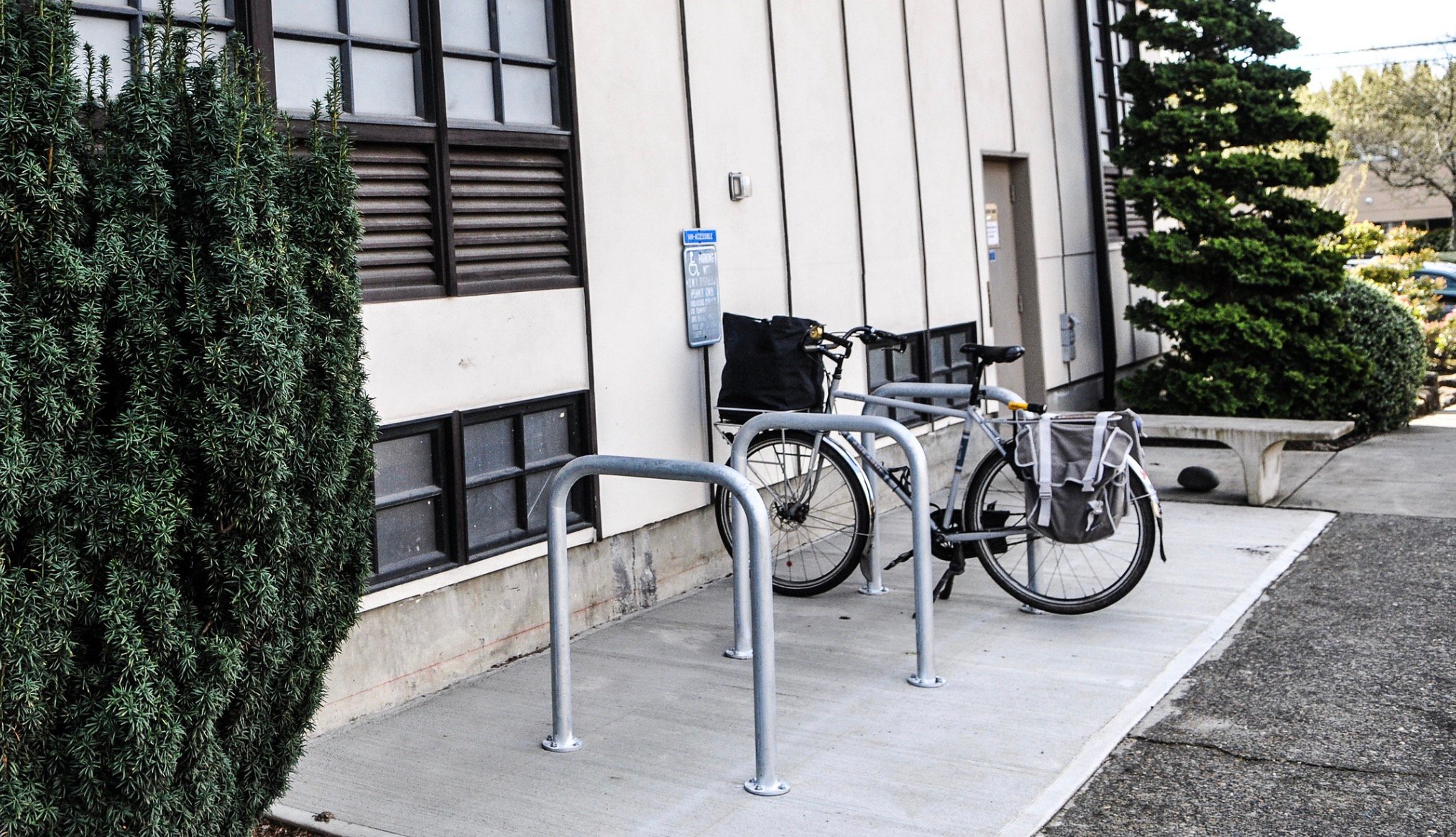
Portland handed a main replace to its bike parking code in 2019, the primary overhaul of necessities since 1996. The code upped the minimal amount required, added theft prevention guidelines, addressed accessibility considerations, ended a loophole that allowed builders to place a hook inside a unit to meet the long-term parking requirement, and extra.
Rubio is commissioner-in-charge of BDS and the Portland Housing Bureau, and he or she additionally heads Prosper Portland, town’s financial improvement company. With that portfolio, she sits on the crux of the housing affordability and provide crises that Portland and the state face.
And there’s strain coming from the state to do one thing. Certainly one of Governor Tina Kotek’s first actions in workplace was to declare a state of emergency due to homelessness and to signal an government order creating the Governor’s Housing Manufacturing Advisory Council with the aim of constructing 36,000 houses per 12 months.
Commissioner Rubio is well-placed to assist meet these targets. As we speak’s survey is a primary step in streamlining Portland’s processes and insurance policies with an eye fixed towards constructing extra housing.
The slowness and complexity of Portland’s allowing system has been the topic of many reviews and audits over the previous a number of years. The 2021 report from the Metropolis Auditor, particularly, reads like a supporting doc for changing the fee type of authorities with a metropolis supervisor:
The fee type of authorities and fragmented allowing authority throughout seven bureaus has resulted in nobody entity empowered to resolve these long-standing Citywide issues. That is exacerbated by management turnover – each with bureau administrators and Commissioner assignments – that leads to modified priorities, focus areas, and funding selections. Because of this, every bureau director and their Commissioner-in-charge stays centered on their very own bureau and never on the Metropolis allowing course of as a complete.
“The subsequent step is to do additional analysis to see if any adjustments associated to a selected course of or coverage would assist to extend housing manufacturing.”
– Jillian Schoene, chief of workers for Commissioner Rubio
Given the governance inefficiencies identified by the audit, and the impact they’ve had on the allowing course of, I reached out to Commissioner Rubio’s workplace to see if they’d a way of whether or not it was the precise laws themselves that had been slowing down housing manufacturing, or if the offender may be the confusion attributable to having allowing authority unfold throughout seven totally different unbiased bureaus. Rubio’s Chief of workers Jillian Schoene responded. “Now that now we have the preliminary suggestions [from the survey], the following step is to do additional analysis to see if any adjustments associated to a selected course of or coverage would assist to extend housing manufacturing,” she mentioned.
One other supply of confusion the 2021 audit particulars has been conflicts between new and present laws. The Metropolis Council stopped funding annual regulatory enchancment opinions in 2017, and no reconciliation course of has been in impact since.
Commissioner Rubio, says Schoene, in partnership with BDS and the Allow Job Power, has arrange a Regulatory Workgroup tasked with “designing a brand new course of for town to observe for code improvement,” with the aim that for any new regulation “there’s front-end vetting to be taught early the place conflicts could come up.”
The survey had a field for extra feedback, and people make for bracing studying (even rivaling BikePortland feedback). A number of of them jumped out for various causes, together with quantity 26, in all caps:
PLEASE KEEP THE PUBLIC INFRASTRUCTURE REQUIREMENTS! THESE INVESTMENTS ARE IMPORTANT TO THE FUTURE OF OUR CITY AND PLANET BY MAKING MORE WALKABLE NEIGHBORHOODS.
Or this one:
You don’t want suspending or modifying [of requirements] to assist elevated housing manufacturing, you have to have workers return telephone calls and electronic mail and pace up the processing a part of the allow. I simply had a townhouse mission that took over a month simply to consumption. Pre-Covid this could have been accomplished in someday. And permits in pre-issuance for weeks just isn’t acceptable. I sometimes don’t have any issues with the laws or charges. It’s the weeks of no response from workers.
This survey is a primary step within the important overhaul of the constructing allowing course of which town is endeavor. Different latest efforts have included the work of commissioners Dan Ryan and Mingus Mapps on the Allow Metric Dashboard, and in addition with the Allowing Enchancment Job Power.
A lot of Portland’s constructed atmosphere depends on enhancements to the general public house made by, and required of, new improvement — issues like new bike racks. BikePortland will probably be following this course of because it unfolds.

Lisa Caballero has lived in SW Portland for over 20 years. She is on the Transportation Committee of her neighborhood affiliation, the Southwest Hills Residential League (SWHRL) and might be reached at lisacaballero853@gmail.com.

